SMS Marketing
March 24, 2026
TheSMSBox Team
WhatsApp API for Enterprise: Designing Intelligent End-to-End Workflows for 2026
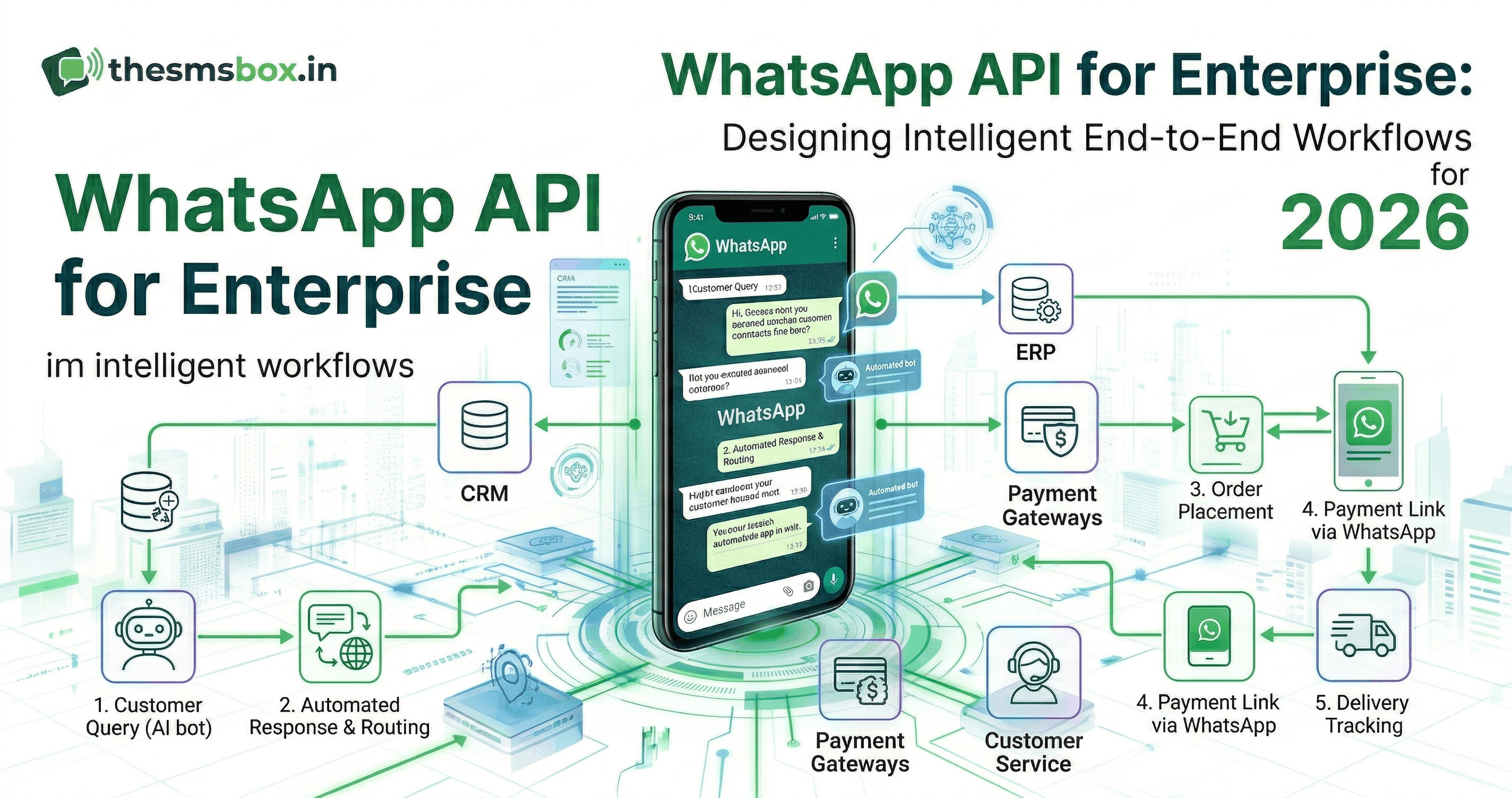
In 2026, the WhatsApp API has evolved into a cornerstone of enterprise communication, enabling organizations to design intelligent, scalable, and highly personalized end-to-end workflows that redefine customer engagement. Enterprises across industries—from e-commerce and fintech to healthcare and education—are increasingly leveraging the power of WhatsApp API to streamline operations, automate customer interactions, and deliver seamless experiences across the entire customer journey. Unlike traditional communication channels, WhatsApp offers real-time, direct, and highly engaging interactions, making it an ideal platform for businesses aiming to enhance responsiveness and build stronger relationships with their customers. At the core of this transformation lies the concept of end-to-end workflows, which integrate multiple stages of customer interaction—from lead generation and onboarding to support, retention, and re-engagement—into a unified, automated system. In 2026, enterprises are moving beyond basic messaging and adopting intelligent workflow design powered by artificial intelligence, machine learning, and advanced data analytics, allowing them to deliver context-aware and personalized communication at scale. One of the key aspects of designing such workflows is automation, where AI-driven chatbots and conversational agents handle initial customer interactions, answer frequently asked questions, and guide users through predefined processes such as product selection, appointment booking, or order tracking. These bots are now capable of understanding natural language with high accuracy, enabling more human-like conversations and reducing the need for manual intervention. However, intelligent workflow design also emphasizes the importance of seamless human handover, ensuring that complex queries or high-value interactions are transferred to human agents without disrupting the conversation flow. This hybrid approach not only improves efficiency but also enhances customer satisfaction by providing the right balance between speed and empathy. Another critical component of enterprise-grade workflows is integration, where WhatsApp API connects with existing business systems such as CRM platforms, ERP software, payment gateways, and marketing automation tools. This integration enables a continuous flow of data across systems, allowing businesses to maintain a unified view of the customer and deliver highly personalized experiences based on real-time insights. For instance, when a customer interacts with a business on WhatsApp, the system can instantly access their purchase history, preferences, and previous interactions, enabling tailored recommendations and proactive support. In 2026, the rise of conversational commerce has further expanded the role of WhatsApp API, allowing enterprises to create complete shopping experiences within the chat interface. Customers can browse product catalogs, receive personalized suggestions, add items to their cart, and complete transactions without leaving the conversation, making the buying process faster and more convenient. Secure in-chat payment integrations have also gained prominence, especially in markets like India, where digital payments are rapidly growing, enabling frictionless transactions and improving conversion rates. Additionally, enterprises are leveraging advanced campaign management features to design targeted and data-driven marketing workflows. By segmenting audiences based on behavior, demographics, and engagement history, businesses can send highly relevant messages that resonate with specific customer groups, resulting in higher open rates and better ROI. Another important trend in 2026 is the use of event-driven workflows, where automated messages are triggered by specific user actions or system events, such as cart abandonment, order confirmation, delivery updates, or subscription renewals. These timely and contextual interactions help businesses stay connected with customers throughout their journey, improving engagement and retention. Security and compliance remain fundamental to enterprise adoption of WhatsApp API, with robust end-to-end encryption, strict data protection measures, and adherence to global and regional regulations ensuring that customer data is handled responsibly. WhatsApp has also introduced enhanced verification mechanisms for business accounts, helping users identify trusted brands and reducing the risk of fraud. From an operational perspective, enterprises are focusing on scalability and performance, ensuring that their workflows can handle high volumes of messages without compromising speed or reliability. Cloud-based infrastructure and advanced load-balancing techniques play a crucial role in supporting large-scale deployments, enabling businesses to manage millions of interactions efficiently. Furthermore, analytics and reporting capabilities have become more sophisticated, providing enterprises with actionable insights into customer behavior, campaign performance, and operational efficiency. By analyzing metrics such as response times, engagement rates, conversion rates, and customer satisfaction scores, businesses can continuously optimize their workflows and improve outcomes. Best practices for designing intelligent end-to-end workflows in 2026 emphasize a customer-centric approach, where every interaction is designed to add value and enhance the overall experience. This includes obtaining user consent before initiating communication, maintaining transparency in messaging, and respecting user preferences to build trust and long-term relationships. Personalization remains a key driver of success, with businesses using data responsibly to deliver relevant and meaningful interactions rather than generic messages. Additionally, maintaining a consistent brand voice across all touchpoints is essential to creating a cohesive and professional image. Enterprises are also encouraged to adopt a test-and-learn approach, experimenting with different messaging strategies, automation flows, and engagement tactics to identify what works best for their audience. Continuous improvement, supported by data-driven decision-making, is critical in staying competitive in an ever-evolving digital landscape. In conclusion, the WhatsApp API has become an indispensable tool for enterprises in 2026, enabling the design of intelligent, end-to-end workflows that transform the way businesses communicate with their customers. By combining automation, integration, personalization, and analytics, enterprises can create seamless and engaging experiences that drive growth, improve efficiency, and build lasting customer relationships. As technology continues to advance, the capabilities of WhatsApp API are expected to expand even further, offering new opportunities for innovation and differentiation in enterprise communication strategies. Businesses that embrace these advancements and invest in intelligent workflow design will be well-positioned to succeed in the dynamic and highly competitive digital ecosystem of the future.