SMS Marketing
April 21, 2026
TheSMSBox Team
The Future of WhatsApp Security: Encryption & Compliance Explained (2026 Guide)
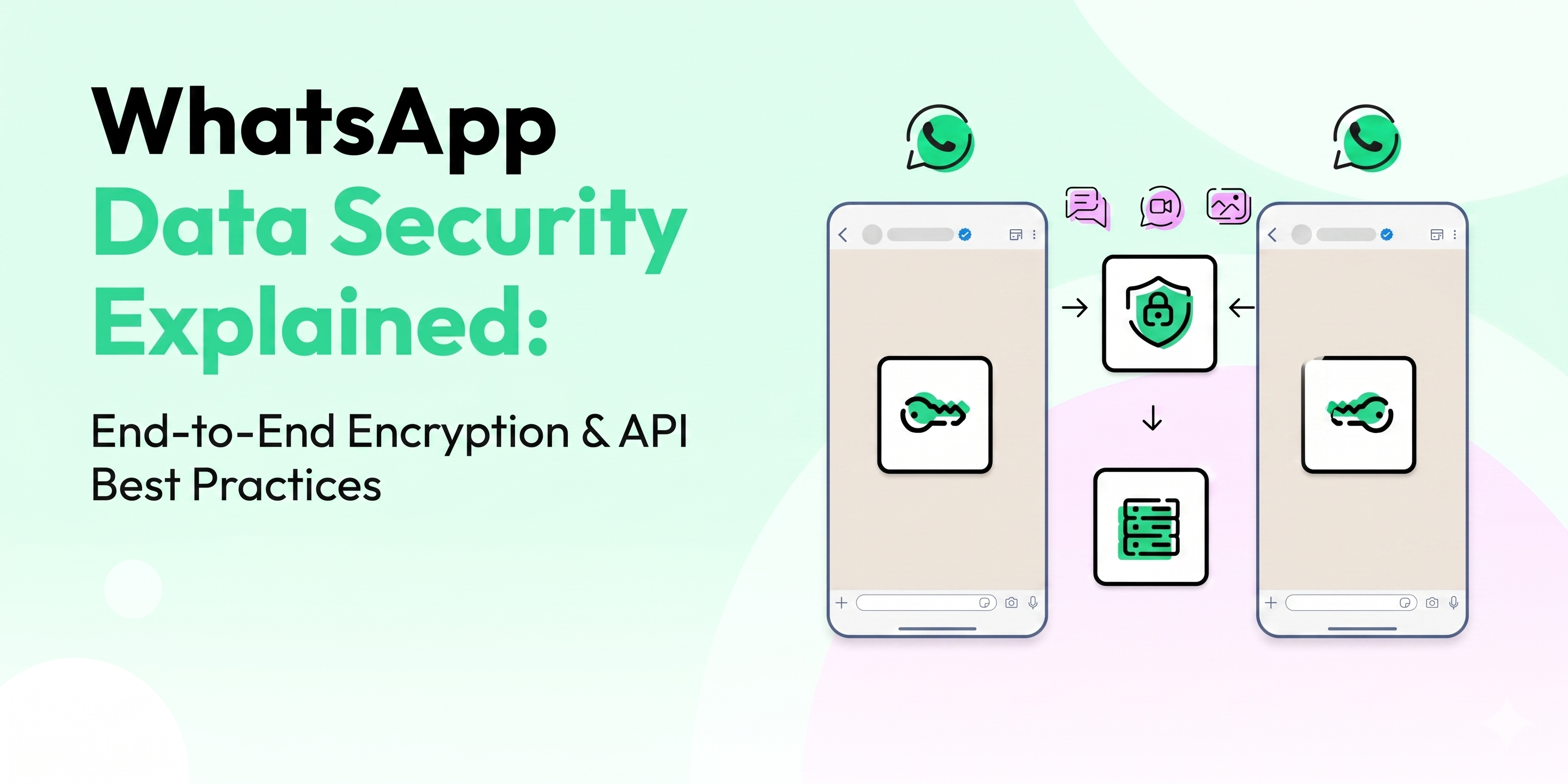
WhatsApp Data Security in 2026: Encryption, API Security & Compliance Guide
One of the most common questions customers ask today is: “Is my data really safe on WhatsApp?”
In a world where data breaches are rising, ensuring WhatsApp data security is no longer just a technical necessity—it’s a strategic move to build long-term trust and loyalty.
By implementing strong WhatsApp security protocols, businesses can protect sensitive customer information while staying compliant with global standards like end-to-end encryption (E2EE), AES encryption, and privacy regulations such as GDPR and CCPA.
With the WhatsApp Business API, companies can manage communication securely, enforce privacy policies, and stay aligned with evolving compliance requirements.
In this guide, we’ll break down common myths, explain how encryption works, and show why prioritizing WhatsApp data security is essential for business growth.
Why is Data Security on WhatsApp a Priority?
Data security is more important than ever, especially when businesses rely heavily on messaging platforms.
Customer trust is fragile: Around 87% of users won’t engage with brands they don’t trust with their data.
Real-world impact: Data breaches have affected millions of users globally.
Strict regulations: Laws like GDPR and CCPA require businesses to protect customer information.
High message volumes: Businesses sending thousands of messages daily must ensure secure communication.
Growing cyber threats: Millions of records are exposed every year due to weak security systems.
Messaging platforms are prime targets for attackers because they contain personal data, transactions, and business conversations.
However, it’s important to note that major incidents like spyware attacks targeted devices, not WhatsApp’s encryption itself.
WhatsApp Data Security: Myths vs Facts
Let’s clear up some common misconceptions:
Myth: WhatsApp reads your messages
Fact: End-to-end encryption ensures only sender and receiver can read them
Myth: WhatsApp API stores customer chats
Fact: Messages are only processed for delivery, not stored permanently
Myth: Cloud API is less secure
Fact: Both Cloud and On-Prem APIs follow the same encryption standards
What is End-to-End Encryption (E2EE)?
End-to-End Encryption is the backbone of WhatsApp security.
It ensures that messages are converted into unreadable code (ciphertext) before leaving your device. Only the recipient’s device can decrypt and read them.
This means:
Not WhatsApp
Not Meta
Not hackers
…can access the content of your messages.
How WhatsApp E2EE Works for Businesses
WhatsApp uses a highly secure system of keys:
Each message has a unique encryption key
Keys are stored only on user devices
Decryption happens only on the recipient’s phone
Example:
If a customer sends their address:
The message is encrypted on their phone
It travels as unreadable data
Your system (via thesmsbox dashboard) decrypts it securely
Even if intercepted, the message would be useless without the private key.
How WhatsApp Protects Chats and Data
WhatsApp automatically secures:
Messages
Voice calls
Video calls
Documents
Photos and files
Key highlights:
Only sender and receiver can read messages
Encryption keys change for every message
No third-party access
For businesses, this means customer details remain safe and private.
Where End-to-End Encryption Falls Short
While E2EE is powerful, it’s not perfect:
1. Metadata is not encrypted
WhatsApp may collect basic info like timestamps or phone numbers.
2. Backups may not be secure
Cloud backups (Google Drive/iCloud) are not always encrypted unless enabled.
3. Device security matters
If a device is hacked or unlocked, chats can be accessed.
4. Compliance requirements
Industries like healthcare and finance need extra security layers (HIPAA, PCI DSS).
Should Businesses Be Concerned?
Not about encryption—but about how they use WhatsApp.
Risks include:
Using unofficial APIs
Weak device security
Poor team access control
The solution is simple: use trusted platforms like thesmsbox and follow best practices.
Can You Read Encrypted WhatsApp Messages?
No—unless you are part of the conversation.
Why?
Only sender and receiver have the keys
No central database access
Requires physical device access
Attempting to bypass encryption is illegal and risky.
Is WhatsApp Secure Compared to Other Apps?
WhatsApp vs Signal
Both use the same encryption protocol. Signal collects less metadata.
WhatsApp vs Telegram
Telegram does not use E2EE by default, while WhatsApp does.
Overall, WhatsApp offers a strong balance of security, usability, and scalability.
WhatsApp Business API and Data Handling
When using the WhatsApp Business API:
1. Data storage responsibility
Messages are managed within your system or BSP like thesmsbox.
2. Additional security layers
GDPR compliance
ISO standards
Secure hosting
Regular audits
Businesses rely on thesmsbox to handle communication securely while maintaining compliance.
Core Security Features of WhatsApp Business API
Verified Business Profiles – Builds trust
Template Approval – Prevents spam
Two-Factor Authentication (2FA) – Extra login security
Cloud API Hosting – Secure infrastructure
These features protect both businesses and customers.
Security Guidelines for Businesses
To maximize security:
Use official providers like thesmsbox
Avoid unofficial APIs
Limit sensitive data sharing
Implement role-based access
Monitor communication regularly
Following these practices reduces risk and improves trust.
How to Protect Conversations with thesmsbox
Using thesmsbox, businesses get:
Official WhatsApp API access
GDPR-compliant systems
Secure cloud hosting
Role-based access control
It provides a safe and scalable way to manage customer communication.
So, is WhatsApp Really Secure?
Yes—WhatsApp is highly secure due to end-to-end encryption.
But security also depends on how businesses use it.
By combining WhatsApp’s encryption with trusted providers like thesmsbox, companies can:
Protect customer data
Ensure compliance
Build long-term trust
FAQs
1. Can WhatsApp read my messages?
No. Only you and the recipient can read them.
2. Are backups encrypted?
Not always. You must enable encrypted backups manually.
3. Does WhatsApp share data with Meta?
Message content is not shared—only limited metadata.
4. Has WhatsApp encryption been hacked?
No. Issues have come from device-level attacks, not encryption itself.
5. Is WhatsApp safe for business?
Yes, if you use official APIs and providers like thesmsbox.
6. Are calls encrypted?
Yes. Voice and video calls are fully encrypted.